


Automatic Duck Coop Door Guide: Sizing, Setup & Predator Protection
Ducks aren't just short chickens. They're built differently, they behave differently at dusk and dawn, and — if you've searched for "automatic duck door" and mostly found chicken-focused advice — you already know that most automatic coop door content skips right over them. This guide covers what actually matters for keeping ducks safe with an automatic door: sizing, behavior, and the predator risks that hit waterfowl flocks harder than they hit chickens.
Why Duck Sizing Isn't the Same as Chicken Sizing
A duck's body is wider and lower than a chicken's, with a distinctive waddling gait that needs more clearance side-to-side than a chicken of similar weight requires. Ducks also tend to move as a group in a rush — especially at feeding time or when startled — rather than filing through one at a time the way chickens often do. A door opening that's technically "big enough" on paper can still create a bottleneck for a duck flock moving together.
That's why sizing for ducks should be based on your specific breeds and flock size rather than assumed from chicken-door defaults. For the full sizing methodology and worksheet, see our complete door sizing guide — the breed chart below gets you a fast starting point.
Duck Breed Size Chart: Which Door Size Do You Need?
| Duck Breed / Type | Typical Weight | Recommended Door |
|---|---|---|
| Call Ducks, Mallard-derived bantams | ~2 lbs | Standard 10"×10" (small/mixed flocks) or Large 12"×12" for mixed-breed flocks |
| Indian Runner, Khaki Campbell | 4–5 lbs | Large 12"×12" — their upright, narrow stance needs height clearance more than width |
| Pekin, Rouen, Swedish, Cayuga | 8–10 lbs | Large 12"×12" for flocks under 20 birds; Extra Large 15"×15" for larger flocks or mixed housing with chickens |
| Muscovy | 10–15 lbs (males larger) | Extra Large 15"×15" — broad-bodied breed needs the extra clearance |
| Mixed duck-and-goose flocks | Varies | Extra Large 15"×15", or Certified Humane 21"×18" for larger goose breeds or flocks over 20 birds |
If you're keeping ducks alongside chickens — a common setup — size for your largest bird, not your average bird. A door sized right for your Leghorns but tight for your Pekins will slow down exactly the birds most likely to get caught in a bottleneck at dusk.
Why the Drive Mechanism Matters More for Wet, Muddy Coops
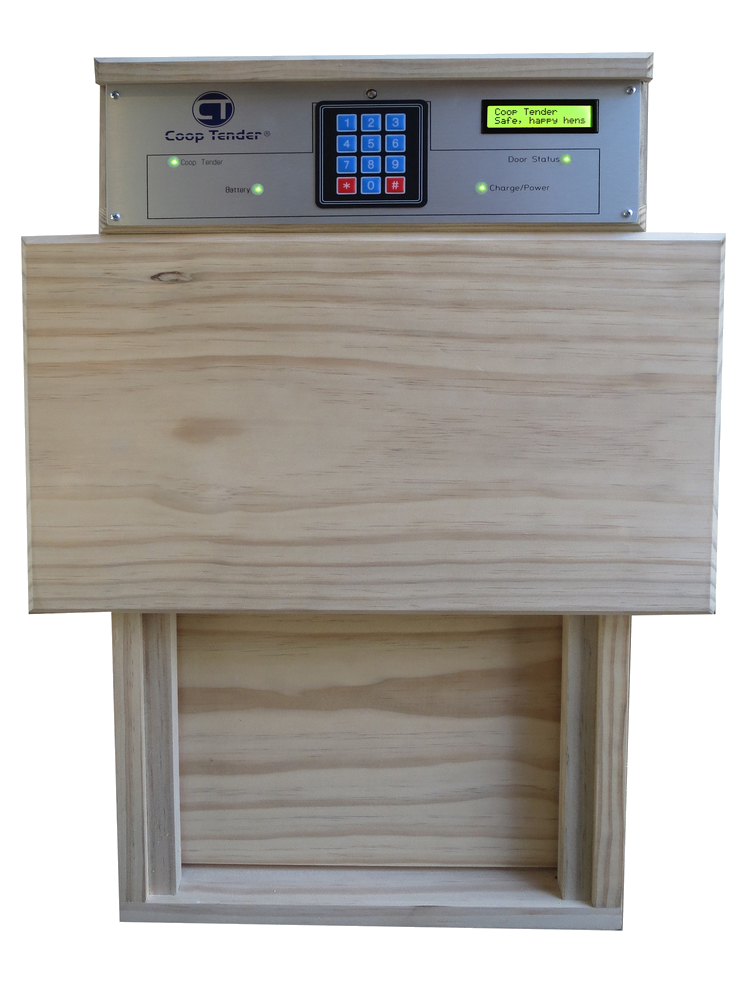
Duck coops run wetter and muddier than chicken coops, almost by definition — ducks track in water and mud from their pond or kiddie pool daily. That moisture exposure is hard on cable and chain drive systems, which can stretch, rust, or bind when grit and moisture work into the mechanism over time. Coop Tender's solid steel Acme-threaded worm drive is sealed against that kind of exposure and creates a mechanical lock at the bottom of its travel — not just gravity holding a cable-suspended door shut, but a drive that a predator physically cannot force open, even in a muddy, high-moisture coop environment.
Setting Up Your Automatic Door for Duck Behavior
Ducks and chickens don't behave identically around a new door, and a few adjustments make the transition smoother:
- Expect a longer training window. Chickens often adapt to an automatic door within a few cycles; ducks can take longer, particularly if they're used to being manually let out to their pond each morning. Run the door in manual-open mode for the first several days while your flock gets used to the sound and movement.
- Watch evening return timing closely. Ducks are less reliably "on schedule" at dusk than chickens, especially if they're still finishing time at a pond or run. If you're using timer mode rather than light-sensor mode, build in a buffer, or consider light-sensor mode so the door responds to actual dusk conditions rather than a fixed clock time.
- Account for group movement. Because ducks tend to move through an opening together rather than single-file, make sure your door's open cycle allows enough time for the full group to clear the opening before considering a close-if-clear safety feature (if your model includes one).
Predator Protection: Why It Matters More for Ducks
Ducks are more exposed to nighttime predators than chickens in several ways: they don't roost up off the ground the way chickens do, they're often housed with more open-air access for pond proximity, and low, flat coop entries designed for a duck's body shape can be easier for a determined predator to work at than a chicken-height opening. A mechanically locked worm-drive door closes that gap. For a full breakdown of seasonal predator pressure and hardening your coop beyond the door itself, see our predator protection guide.
Keeping Ducks and Geese Together
If your waterfowl flock includes geese as well as ducks, size for the geese: the Extra Large 15"×15" door comfortably handles most duck breeds plus geese, and flocks with larger goose breeds or more than 20 birds total should step up to the Certified Humane 21"×18" door. The same worm-drive mechanism and freeze-protection features apply across every size, so you're not trading reliability for the larger opening.
Cold-Weather Operation for Duck Flocks
Unlike chickens, ducks often still want outdoor access in freezing weather — a frozen pond doesn't stop a duck from wanting to check on it. That makes reliable cold-weather door operation especially important for waterfowl keepers heading into winter. Every Coop Tender door includes Freeze Protect, which keeps the door safely closed during dangerously cold temperatures rather than cycling normally, and the steel worm drive is rated for reliable operation from -20°F to 185°F. For full winter setup guidance, see our winter operation guide.
Frequently Asked Questions
What size automatic door do ducks need?
It depends on breed. Smaller breeds like Khaki Campbell and Indian Runner do well with the Large 12"×12" door. Larger breeds like Pekin, Rouen, and especially Muscovy are better suited to the Extra Large 15"×15" door, particularly in flocks over 20 birds or mixed housing with chickens.
Can chickens and ducks use the same automatic door?
Yes. Size the door for your largest or widest-bodied bird in the mixed flock — typically the ducks or larger chicken breeds — and both species can share a single door and opening without issue.
Do ducks need a ramp for an automatic coop door?
Ducks are less agile on steep ramps than chickens due to their body shape, so a shorter, gentler ramp angle (or a ramp-free, ground-level threshold where your coop design allows it) works better than the steeper ramps some chicken coops use.
How long does it take to train ducks to use an automatic door?
Most duck flocks adapt within one to two weeks of supervised exposure, somewhat longer than the few days typical for chickens. Running the door in manual-open mode during the first week while ducks get used to the sound and motion speeds up the process.
What about geese — do they need a different door than ducks?
Geese generally need at least the Extra Large 15"×15" door, and larger goose breeds or flocks combining geese with other waterfowl often do best with the Certified Humane 21"×18" door.
Will a solar-powered door work for a duck coop near a pond?
Yes — Coop Tender's solar doors are hybrid AC+solar systems, so they're not dependent on full sun exposure the way a solar-only system would be. This makes them a good fit for duck setups near ponds or tree-shaded areas where a pure solar system might struggle.
Ready to size a door for your duck flock? See the Large 12"×12" collection or the Extra Large 15"×15" collection, or use our complete sizing guide for personalized recommendations based on your specific breeds and flock size.
Leave a comment